Thursday, June 28, 2012

Drumming, Movement, and Story

Giraffes Can't Dance by Giles Andrea was the perfect lead-in to drumming and dancing this week for Story Story Dance. After our standard warm-up and the story, I brought out the djembe. Students explored various types of movement as I played. I encouraged them to use their whole bodies to move with the drum. In my experience, children have no hang-ups when it comes to embodying the sounds of the drum, they are fearless and go for it.

For the next part of the class, I told the children that now they would be the drummers and the dancers. One by one I introduced them to a variety of percussion instruments and showed them how to play it. This included three homemade shaker drums two frog drums, a rain stick, a gecko clacker, and tone block. The frog drums invited us to have a great discussion about same and different. One of the frogs was small and yellowish, the other was bigger and very dark brown. We also listened closely to the sounds they made to determine if their sounds were the same or different. Then, we counted all the instruments to see how many we had all together.

Percussion Instruments


Music and instruments invite so much opportunity for children to show what they know and make connections across the curriculum.

For the drumming dance party, I broke the class up in half by inviting students up to play the instruments while the others danced, then switched. Once the drummers had their instruments, we reviewed two hand signals - start and stop. If you have never been a part of a drum circle, I cannot in words describe the excitement that occurs when all the drummers are playing and then all stop together. There is something magical in that moment when everyone stops at the same time. My little drummers got to experience this yesterday and the magic was definitely there.

I ended class by giving everyone a turn to come up to the djembe and play it.  This is always a fun activity because everyone gets to have their moment to hear themselves on the drum. Some children hit as hard as they can, some play a little quiet, some give it one big whack then walk away, while others take a moment to find a rhythm.

So much fun and so much learning!


Thursday, June 21, 2012

Animal Masks and Movement

After two months on hiatus from foot surgery, I am finally back in the classroom! This week, I kicked off Story Story Dance with animal masks and the book Rumble in the Jungle by Giles Andreae. This book introduces many different animals, but I focused on the ones that I actually had masks for. This worked out great because if I had done all the animals, this would have been an hour long class. As it was, this class went over my allotted half-hour slot and took about forty-five minutes. Luckily, the teachers were great and happy for the extended class considering the kiddos would have shortened outside time due to the heat. Sometimes things just work out.

The masks were very simple, made out of animal face paper plates from the super market and tongue depressors for holding. I got this idea from a yoga teacher I worked with who used the plates in her children's yoga class to help children embody animal poses.


For this class, I read the short poems about each animal from the story and students explored smaller movements in their sitting positions.  After the story, we created a big circle with movement space in the center. Every student was given a mask and each animal had their own music. I used short musical compositions from a pre-ballet music selection. In partners, students came to the center of the circle and explored the larger animal movement.

As always, the children surprise me. The children seemed to love taking their masks and scaring the children in the outer circle and the children in the outer circle seemed to love getting scared! After every set of animals had a turn in the center, we went to the animal dance party, where all the animals dance together and the children become any animal they want to be.

In the beginning of the story, the narrator introduces the animals as waking up in the jungle and the end of the story, the animals go to sleep. So of course we ended class with all the animals falling asleep in the jungle. The fake snoring was hilarious! I traded masks for stickers and ended class. It's great to be back!

Thursday, April 19, 2012

Shaker Bottles and Math Foundations


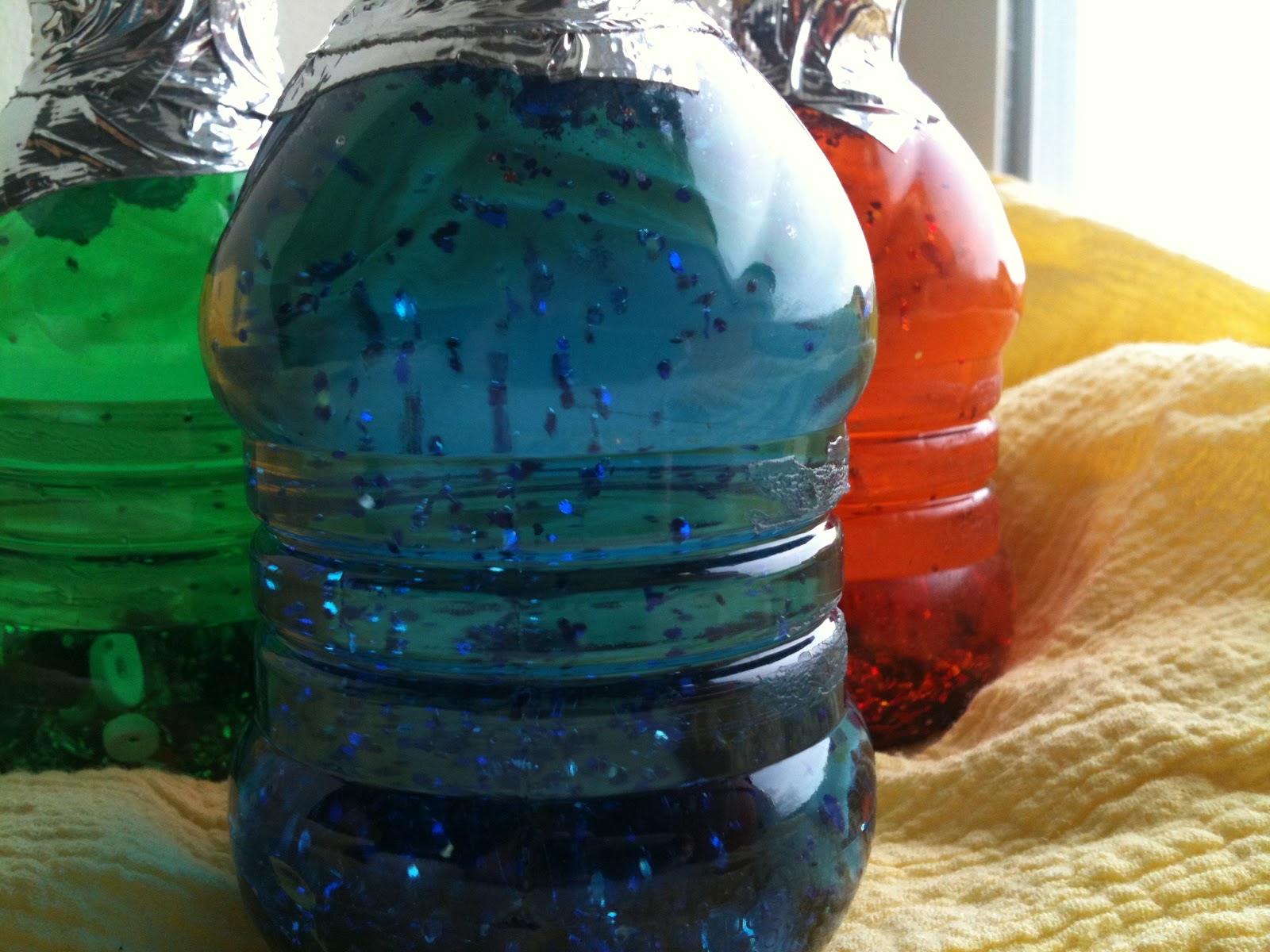
Over the last few weeks, I have been saving and collecting various sizes and shapes of water bottles. I made enough for every student to have one during the latest story dance class. First we read an alphabet book that also features colors. We reviewed the colors before I handed out the shaker bottles. 

With shaker bottles in hand, I led the kiddos through a movement exploration exercise that explored location words - we shook the bottles in front, above, behind, to the side, down low,  and in between our legs! Then, of course, we got to free dance with them. Not only was this a fun, kinetic exploration on spatial awareness, but these words and concepts are also foundational math skills. 

We continued with our math skills at the end of class through bottle color-grouping and matching exercises. I encouraged students to find other students who's bottles were a similar color to their own bottle. For our cool down, I laid out different color felt squares. Then I called on students one at a time to bring up their bottle and put it on the corresponding color square (apparently I need more red bottles!). This part of the class also elicited a great discussion with the children about colors. For example, water in one bottle was a little bit blue and a little bit green - which square should it go on?

Young children are often mesmerized by the swirling objects inside the bottle. The ones I made also include letters of the alphabet, words, and fake fruit! Because the bottles also have some weight to them, the children are getting a good work-out, keeping their bodies healthy and strong while dancing, moving, playing, and learning.


 Making Shaker Bottles!

First, save a bunch of water bottles.


Then, make a trip to the local craft store for supplies - don't forget the food coloring and corn syrup from the grocers.


Then, go to town!


Saturday, April 14, 2012

Blogger Tag

  • Jen Navarro tagged me for some creative blog fun! If you want to play on your own blog, here are the rules:
  • You must post the rules
  • Answer 11 questions the tagger posted for you
  • Create 11 questions to ask the people you tag
  • Tag 11 people
  • Let them know you’ve tagged them
Here are the questions I got from Jen with my responses:
 And now for my 11 questions: (I can’t make the numbering below go away :()
  1. When did you really start to embrace your creative self? In high school
  2. Who encouraged you on your creative path? My Nana, Nana White, My Mom, My Aunt Fran, My Brother, My Sister, My Father, My Aunt Donna, My Husband, My Teachers, My Friends
  3. If you were going to change careers, what else would you do? EMT or Police Officer
  4. If you had a patron for a year, what would you do with your time and money? I would open an expressive arts studio in Lowell, Ma that is dedicated to arts education for at-risk youth and students with special needs.
  5. What piece of art would you most want to have in your home? A Degas dancer, or one of his paintings of a nude brushing her long hair.
  6. Which artist, living or dead, would you like to have dinner with?This is a really hard question to answer, but I am going with Sir Paul McCartney.
  7. If you were going to host a salon and could invite anyone living or dead, who would you invite?Amanda Palmer. I think she would be fun to work with and help me put on a really go show.
  8. What kills your creative buzz and how do you get it back? Being sick. Take care of being sick, be sick. Be in the muck of it. Accept it. Then one morning I get up, and I can stretch to one side, then the other. Gradually I am able to start doing more and more stretches. Then my body is ready to participate again. Then I start dancing.
  9. Describe your creative work space. I have various creative work spaces. It depends what I am doing. I have been making water shaker bottles and rice and bean shakers out of canisters of all kinds. That is in the kitchen and the room that is not the bedroom - its the everything else room. I have all my craft and costume supplies, beading and jewelry making stuff, buttons, paper towel and toilet paper tubes, paper plates, tongue depressors, ribbons, fabric, tapes of all kinds, and sewing machines. Then there are my moving spaces. Around the kitchen of my apartment, anywhere outside, whatever classroom or learning space I am in, whatever studio I can get to.
  10. Do you ever sell your work? Does the prospect of selling it alter it in any way? I think when you ask people to pay money for your art, you are offering them another kind of relationship with you, the artist. I think once you sell your art, you really have to be ok with letting it go and accepting that others will have a relationship with it that has nothing to do with you anymore - whether it is performing arts or fine arts.
  11. What percentage of the creative process is fun for you? 100% I love the process. I love the moment of inspiration and then running with it, wherever it goes. As a performer though, I live for the moment when the lights go up and the music starts.
  12. Now I just have to figure out how to tag some people!
  13.  Here are my 11 Questions for the next bloggers:
  14.  What is your favorite way to share your art with others?
  15.  What area of your work would you most like to improve?
  16. What keeps you motivated to maintain a creative life?
  17. If artists were superheros, what would your super hero name be?
  18. What would your theme music be?
  19. Who or what, would your "art nemesis" be?
  20. You can go back in time and work with any artist(s) of anytime, anyplace - where do you go? who do you see?
  21. How young were you when other people started calling you an artist?
  22. What did you create today?
  23. What art pieces are in your bathroom?
  24. What is your favorite free public art?
  25. Now tag some people!

Sunday, April 8, 2012

Creative Movement with Fabric

If there is anything I have learned from running creative movement classes with children it's that they LOVE FABRIC!

This week I taught the story dance class using Down by the Cool of the Pool by Tony Mitton. For the main-movement-event I brought a very light weight, vibrant blue fabric that has a little stretch to it. We used it in similar ways to using a parachute. We gathered in a circle, first sitting, and all grabbed on to the material. Then we became the cool pool and shook the fabric to make waves. We all stood up and the children naturally clustered under the fabric full of giggles. (It never fails, fabric on top of kids = happy laughing children. Every time.) We lifted the fabric up over our heads giving us a nice elongated stretch. Then we made made big waves by making the fabric go up and down.

(actual fabric!)


In the story, the different animals teach each other their dances and they are excited to learn from each other. For the next part of the story dance class, each student had a turn to do their favorite dance/movement under the fabric; this could be their favorite animal movement from the story, or their own and the other students try to copy. This was a blast!

For our last dance, I put on music for the children to freestyle to while I walked around waving the fabric over them as they danced. I have done this in other classes with other kinds of fabric and the children seem to love getting caught by the fabric, individually, as a group, or in small groups. As a teacher of young children, I highly recommend the use of fabric in your classroom. If you are not sure what to do with it, don't worry, the children will have a million ideas for you!


Friday, March 30, 2012

On Being an Expressive Arts Therapist

Since graduating from the degree program where I officially earned my title of "expressive arts therapist," I have had several potential future ETs ask me about the field, wondering if this is the right career path for them. This is often a difficult and exciting conversation to have! In answering them, I reflect on my own path as an artist, educator, and therapist. I also tell whoever I am speaking with that expressive arts therapists are all different - we all bring something different to the work and we all do the work in different ways, in different places, and with different people. My path and my work is not going to look the same as that of another expressive therapist.

I came to the work with the training and education of a performer and teacher. This background shapes my work as an ET and, in many ways, defines it. Another part of my career development is the path I took down the road of early childhood education. In my story, I often mention that being an early childhood educator was never in my plans, but has become as defining to my identity as an expressive therapist as my background in performing arts.

Me conducting a "rumble" with pre-k students in a music instrument circle.

Today,  I have a better sense of who I am as a person, an artist, a teacher, and expressive therapist. Over time, I have developed specialized areas of the work I do; early childhood, autism spectrum disorders, and learning disabilities. I continue to hone my craft as a therapist, educator, and as a (my first love) - performer!

For me, being an expressive arts therapist is the greatest job in the world. I can share my love of performance and the arts while affecting lives - including my own. When I show up to run a story dance group with preschoolers who have speech delays, who have experienced trauma, who struggle with motor skills, and witness a little one light-up and smile when they dance with a scarf, jump to the tambourine, or dance to the music, I know I have made change in the world. It may seem like a such a small thing, but it is so huge, it is bigger than me. Being a part of that, there is nothing more fulfilling. There is nothing more affirming.

That is not to say the road is an easy one, the struggles have been many. As I often say to those who are interested in joining the field, we create our own jobs. This can mean going out on your own - marketing, promoting, traveling, renting space, and all that fun stuff. It can also mean taking a job in another position and bringing expressive therapies to it. When I talk about it, I feel empowered to be a part of this community of people who are still evolving the field. It can also be frustrating and depressing at times, especially when your paycheck may not reflect the value of the work you do.

Despite all the obstacles that one may face discovering themselves as an expressive arts therapist in a field that is still getting to know and define itself, I could not imagine living any other way. If you have passion for the arts and making change in the world, this may be the path for you too.


Monday, March 26, 2012

Nursery Rhymes Starring Lambs and Sheep, or Props are Helpful When Teaching


During the month of March, I introduced the lamb (who grows up to be a sheep) for the toddler and preschool story dance classes.  Using a book with great illustrations, I read Mary Had a Little Lamb (we also sang). The lamb grows-up to be a sheep and we read Little Bo Peep, then we sang and read Baa Baa Black Sheep. We also changed the color of the sheep a few times.

After reading Mary Had a Little Lamb, we played follow-the-leader. I gave one tot the stuffed animal and she became the leader and we all followed her around the room. We played this until everyone got a turn. I followed the leader while tapping a beat on the tambourine.

The Redstone School, now in Sudbury, Massachusetts, is believed to be the schoolhouse mentioned in the nursery rhyme.http://en.wikipedia.org/wiki/Mary_Had_a_Little_Lamb

The stuffed animal as a turn-taking prompt has been working very well for the toddlers and preschoolers. And since sharing is not a toddler's greatest skill, I am so glad when I see them hug and pass.

We also acted out Little Bo peep, which the little ones really seemed to get a kick out of. I pretended to be Little Bo Peep, distraught over losing all my sheep, while the children hide (pretended to hide). Then, they all come back wagging their tales behind them. They wanted to play this several times, some children took turns as Bo Peep. Toddlers and preschoolers enjoyed the dramatic action!

In general, props have a wonderful role in the creative movement class, and other expressive arts, as they invite imagination, extension, and discovery of movement; a theme I have seen repeated over and over. Visual and kinetic learners may especially appreciate when a prop appears in the learning space.